Pathfinder: Face Mask of Disease Prevention

I saw a meme of how if there was a magic item that gave you a bonus to prevent disease, you’d wear it all the time. Well, I don’t know of such an item so I figured now was a great time to create one.

Wear your face masks. Wash your hands. Social distance.

Play RPGs while social distancing by playing them over Fantasy Grounds with JBE’s expanding suite of expansions. See them all today at the Fantasy Grounds Store.

Face Mask of Disease Prevention

Aura divination; CL 1st

Slot face; Price 300 gp; Weight 0.5 lbs.


Description


When this black cotton scarf is tied over the nose and mouth, the wearer receives a +1 resistance bonus to saving throws against disease.


Construction


Requirements Craft Wondrous Item, guidance; Cost 150 gp

Pathfinder 1e: Bag of Wind

Over the years, I’ve read many mythological tales and seen such items in D&D/Pathfinder. Belts of giant strength, winged boots, various magical weapon and armor properties all owe their origins to the Greek, Norse, and other tales.

Of all the items I have seen there one I have never seen: a big of wind. In The Odyssey, the bag of wind was supposed to blow the Odesseus and the crew home; instead the crew opened the bag early and they were blown to the other side of the world. While such a powerful item would be an artifact level power in Pathfinder, something of similar concept could be used to blow enemies around the battlefield. With that in mind, I present to you a bag of wind.

Bag of Wind

Aura weak evocation; CL 3rd

Slot –; Price 300 gp; Weight 1 lbs.

Description

The size of a water skin and closed with a stone stopper, a bag of wind can be opened as a swift action after a successful bull rush attempt. The winds carry the target an additional 10 feet.

Construction

Requirements Craft Wondrous Item, gust of wind; Cost 150 gp

13th Age: The Mother, an Alternate Icon

All year long we are releasing alternate icons for 13th Age. Read previous entries in the series: the Usurper, Deposed Heir, Fleshcrafter, Herald, Wandering Spirit, and the Guild Mistress. This month we leave civilization behind and bring in someone that doesn’t dish out cruelty as much as giving others permission to release their own cruelty, the Mother, the equal and opposite of the Great Druid.

In many ways, the Mother is not terribly dissimilar to the Guild Mistress, although both would slice your throat if you made the suggestion to their faces. Both make deals and trade goods, and those deals are always tipped in the icon’s favor. What they trade in is where they differ. Where the Guild Mistress trades in goods and services, mostly wanting gold in return, the Mother trades in secrets and power, wanting everything from their firstborn child, souls, or a day’s worth of memories in return. Only a fool walks away after having struck a bargain with the Mother thinking well of what had just transpired.

Quote

“Come. Let us see what you have to offer the dear Mother.”

Frequent Location

Swamp of Desperation, while it is said that the very trees emit this stench that makes one feel despair, the truth is the opposite, unfortunately. None come to this swamp if had any other option, bringing the stink of desperation with them. Over time, the trees, water, ground, and air have absorbed it, to the point that the smell overwhelms those coming here.

Common Knowledge

The Mother has the ability to grant wishes. The barren can have children. Those afflicted by some terrible disease are cured. Peasants find true love with royalty. Few speak of the price. The pain their eyes or the eyes of their lives ones does the speaking for them.

The Icon and Adventurers

Wise adventures will avoid the Mother. Far to many seek her out, hoping to get some deal made my a despite villager undone. Those same adventurers walk away either making the situation worse or having to collect the price from others that owe to the Mother. Even less wise are the adventurers seeking her out, looking for ways to defeat their enemies. She always knows their weaknesses. What price is an adventurer willing to pay to win?

Allies

No icon publicly says they have anything to do with the Mother. The truth is far more complicated. Both the Deposed Heir and the Usurper have avoided sending troops here, no matter how much someone begs them to. Even the Herald, avoids speaking about the Mother when someone comes to him about the pain she causes. Their silence make some wonder if this is how they attained such power. Agents of each of these have been rumored to occasionally collect the price from those foolish enough to strike a bargain with the Mother, but few believe such tales, and those that do believe that do not assume that they do so with their respective icon’s blessing.

Enemies

The Wandering Spirit and the Guild Mistress are the only two that openly talk about their emninty towards the Mother. Many skilled crafters and guild enforcers have lost their desire to keep plying their trade after paying the Mother’s price, costing the Guild Mistress a valuable members of her team.

The Wandering Spirit is sensitive to the anguish the people feel after paying her price. If anyone would be sympathetic to the cause of adventurers seeking to undo some deal struck with the Mother, it would be this one. Yet the Wandering Spirit will not strike at the Mother directly, fearing to be trapped in some soul crystal of hers. However if adventurers that helped the Wandering Spirit receive a reward of the location of some forgotten weapon or item and it coincidentally may defeat one of the Mother’s agents, that is not the Wandering Spirit’s problem.

History

The most powerful of the cruel and capricious fey, the Mother rose to prominence after recognizing the power of souls, stolen memories, and the list children. Whether she did not know or did not care that such power corrupted even the darkest of souls is not known. The longest lives elves that glimpsed her through the centuries spoke of her living body purifying over time. Supposedly she was once the model of grace and beauty; none would describe her as that today.

The Reason to Fear

No one exactly knows what she has done with the army of children she has taken. Between them and the souls and the memories she has collected, it is possible that she has more raw eldritch power available to her than any other icon.

While it may be rumored that some icons achieves their standing from the Mother granting a wish, one icon that achieves their standing through their own blood, sweat, and tears is the Tinkerer, the equal and opposite of the Dwarf King. Read all about this icon associated with the gnomish people next month at the JBE Blog.

Looking to play 13th Age while social distancing, Download Book of Heroic Races: Age of Races at the Fantasy Grounds Store. You can also find it at the JBE Shop and DriveThruRPG.
PF1e: Apprentice Mage

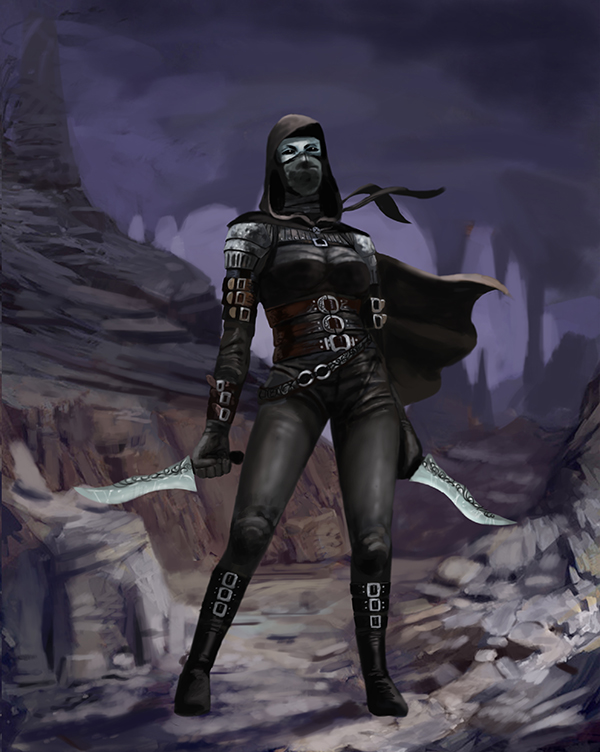
I’ve said before that the next in the Book of Beasts series of NPCs known as the Character Codex will cover the Magus class. The first round of edits is moving along nicely (with some unrelated delays). So today I want to share with you the first NPC in this supplement.

When I created this NPC, I couldn’t help but remember my very first D&D character—Xavier. Mind you, that character was a grey elf fighter/magic-user, back in the days when you had to keep track of your XP separately and elves had names like Swift. This NPC was made in honor of that character. The actual name this character gets will be more in line with today’s names for elves. But I hope it finds a home in our game.

Subscribe to the Book of Beasts: Character Codex today at the JBE Shop, DriveThruRPG, the Open Gaming Store, and Paizo.

Apprentice Mage CR 1/2

XP 200
Elf magus 1
CN Medium humanoid (elf)
Init +3; Senses low-light vision; Perception +1


Defense


AC 17, touch 13, flat-footed 14 (+4 armor, +3 Dex)
hp 9 (1d8+1)
Fort +3, Ref +3, Will +1; +2 vs. enchantments
Immune sleep


Offense


Speed 30 ft.
Melee rapier +3 (1d6+1/18–20)
Ranged dagger +3 (1d4+1/19–20)
Special Attacks arcane pool (+1, 3 points), spell combat
Magus Spells Prepared (CL 1st; concentration +3)
1st—magic missile, shocking grasp
0 (at will)—daze (DC 12), detect magic, ray of frost


Tactics


During Combat The magus opens combat with magic missile and then engages in melee combat, enhancing attacks from the arcane pool.


Statistics


Str 12, Dex 17, Con 12, Int 15, Wis 8, Cha 10
Base Atk +0; CMB +1; CMD 14
Feats Weapon Finesse
Skills Climb +3, Knowledge (arcana) +6, Knowledge (planes) +6, Perception +1, Spellcraft +6 (+8 to identify magic item properties), Use Magic Device +4; Racial Modifiers +2 Perception, +2 Spellcraft to identify magic item properties
Languages Common, Elven, Goblin, Orc
SQ elven magic
Combat Gear scroll of blur, alchemical grease APG, poison ward salve ACG, weapon blanch (silver) APG; Other Gear chain shirt, dagger (2), rapier, ioun torch APG, magus spellbook (contains all 0-level spells and all prepared spells plus 1st—chill touch, returning weapon UC, shield), 16 gp

Black Lives Matter

Like so many of our fellow gaming industry professionals, fellow Americans, and fellow humans around the world, we at JBE are horrified and outraged by the death of George Floyd, Breonna Taylor, Eric Garner, Michael Brown, Tamir Rice, Trayvon Martin, and so, so many others. We say it with you: Black Lives Matter.

We call upon our elected officials to enact meaningful reforms such as banning chokeholds, holding officers accountable for their actions, and cutting bloated budgets of police departments and transferring it to services that will help people without involving law enforcement.

To that end, Jon Brazer Enterprises is proud to take part in the Black Lives Matter Bundles at DriveThruRPG. All proceeds from these bundles go to support some very important causes such as Black Lives Matter, the NAACP Legal Defense Fund, and the National Police Accountability Project. You can find all 6 of the Black Lives Matter Bundles as well as some awesome products created by person’s of color here. Our contribution to the bundle is the Book of Heroic Races: Advanced Elans. We chose this book because it features a strong and wise black woman on the cover that can defeat her enemies with both her weapons as well as her mind.

Recently it was pointed out that our diversity in our cover artwork is lacking. We may be decent with our representation in our interior artwork but we are by no means great. We are committing to increasing the representation of skin tones and body types in our artwork, particularly in our cover artwork.

It’s not just that black lives matter, their voices matter as well. Everyone has the potential to be a hero; those that stand up for the good of all are heroes. No matter what your heritage is, you should be able to see yourself in the games you love. Heroes should be represented in gaming artwork, and that is what we will be aiming to do. As a game designer I look up to once said, “It is not about being perfect but learning from your mistakes and being better than yesterday.”

d66: Reason for Not Writing a New d66 List

So I started working on some more d66 lists again, and I wondered why I hadn’t done more of this during the pandemic. I took some time and thought about it and realized why I hadn’t. So instead of writing at some length as to why I had not, I thought I would make it fun and make it a d66 list by itself. I hope you enjoy this.

If you haven’t grabbed yourself the d66 Compendium and the D66 Compendium 2, treat yourself to these exceptional books today at DriveThruRPG.

d66 List Reason for Not Writing a New d66 List
11 Assembling a desk char
12 Attacking the spiders
13 Baking a loaf of bread
14 Binge watching cooking / gardening videos
15 Busy eating cake
16 Cancelling appointments
21 Creating Pathfinder spells
22 Doing some basic housework
23 Emotionally worn out
24 Enjoying awesome 80’s movies
25 Getting lost in Twitter
26 Laying awake at night, trying to sleep
31 Looking at my unfinished LEGO project
32 Making Fantasy Grounds products
33 Making something with scrap wood
34 Mowing the lawn, again
35 Optimizing the home office
36 Organizing my book collection
41 Overcooking the eggs
42 Playing a board game
43 Playing with my Star Wars LEGO fighters
44 Prepping a D&D game for the kids
45 Reading an RPG book I’ve wanted to read for a while
46 Sleeping, please don’t wake me up
51 Slept poorly the night before
52 Spring cleaning
53 Staring at the deer eating the victory garden
54 Surfing Facebook and feeling happy / sad / depressed / angry
55 Talking about a theoretical dog we want
56 Telling myself to go for a walk
61 Thinking about baking a pie
62 Watching late night comedians adapting to working from home
63 Watching the news about the pandemic / protests
64 Wiping down the groceries
65 Working on the victory garden
66 Writing Pathfinder NPCs

PF 1e: Tarfoot

Not long ago, I mentioned that while working on Book of Beasts: Magus Codex, I noticed there are far too few touch spells. Now that that supplement is with the editors, I am writing new spells designed with the magus class in mind. All of these spells are touch spells. Previously I showed off the level 1 spell frigid grasp. This time I’m sharing a level 2 spell named tarfoot.

When creating tarfoot, I looked at slow and ask how I could make it more advantageous for a magus. Obviously, reducing the range to touch came first. Next was to make it available earlier than 7th level. The solution there was to make it a 2nd level spell. To accomplish I had to turn the power down just a little (since the power was already reduced by making it a touch spell). Reducing the versatility was a good start so I cut the possibility of losing the target’s attack. Losing the move action entirely was to powerful, so I cut the speed by an amount that would hurt. Even that, however, seemed an excessive reduction in power for a second level spell. So I added in the loss of the 5-foot step.

It was this last change, however, that I like best. Slow is a transmutation spell, magicly affecting the body and making it resistable to normal saving throws. By switching it to conjuration, the magic is creating something, and that something is what is holding the target back. That allowed me to play with the way to bypass this spell in a fun and memorable way.

If you have any feedback, please let me know in the comments below. I would love to hear your thoughts. Also be sure to check out all of JBE’s 1e Pathfinder products at our shop at JonBrazer.com. It is your support that let’s us keep making new Pathfinder supplements.

Tarfoot

School conjuration (creation); Level arcanist/sorcerer/wizard 2, bard/skald 2, bloodrager 2, magus 2, occultist 2, psychic 2, spiritualist 2, summoner 2, unchained summoner 2
Casting Time 1 standard action
Components V, S, M (a snail shell)
Range touch
Target creature touched
Duration 1 round/level
Saving Throw see text; Spell Resistance yes
Black sticky goo covers the target’s feet, reducing its base land speed–as well as burrow and climb speed if the target has either of these speeds–to half their normal; armor and encumbrance reduce the target’s speed as if the target’s speed is unchanged, reducing it after the speed is halved (to a minimum of 0). Additionally, the target cannot take a 5-foot step while under the effects of this spell. As a standard action, the target can attempt to escape this with either a CMB check or an Escape Artist check. CMD in this case equals the saving throw DC for this spell. A successful check ends this spell.

3 Rules for Plot Lines in a Long Term Campaign

This blog post is my latest in my 3 Rules series. Check out the others here.

During COVID-19, I’ve been running two D&D 5e games over Fantasy Grounds: one is for my daughter and her cousins, the other is for my wife and a group of adults. Through it all, I have a number of rules that help me tie plot lines together, even when weaving several different modules into a single campaign. These are not exclusive to Dungeons and Dragons or even fantasy games. These work no matter what your game.

1) Don’t Define Everything

When I started off the adult campaign, I had two PCs deliver messages to various NPCs. While the idea for them was to simply get them to go to the location I wanted them, I had absolutely no idea what was in those notes. I’m glad they didn’t look because I would have had to make it up on the spot. In my younger days as a GM, I would have had those notes detailed out; when the PCs didn’t look at them, that would have been work saved for a different day at best or at worst forgotten about when I needed it or simply no longer relevant.

Fast forward several sessions, I needed a way to get the PCs to investigate some orcs as I was transitioning from the Lost Mines of Phandelver to the Forge of Fury from Tales of the Yawning Portal. To help with this, I created a secret love affair between the one of those NPCs sending the note and its recipient, saying their love child (now an adult) that they sent away was coming to visit, and that their child was now missing so the recipient asked the adventurers to find the missing person. That got them to the orcs and worked great, until …

2) Turn Dropped Plot Threads into Plot Hooks

… Until the players got distracted and left that plot thread by the wayside. Part of this was my fault; I failed to leave them enough clues to lead them to their target. By the time I realized this, they were literally heading in the wrong direction to save this person.

In my younger days as a GM, I would have made it impossible for them to proceed until they turned back and saved the person. As a more mature GM, I know to turn this into an opportunity. I left the players an old journal from someone long dead, hoping that some superweapon never gets repaired and turned on again, citing a hope about how one born under a certain sign with various rare characteristics (that just happens to match the missing person) is never born. When they read the note I could hear them all collectively swallow hard, as they realized that the plot line they missed suddenly became very important.

And that is now the catalyst for the new adventure.

3) Leave Some Threads Unresolved

One of my characters in my adult game is seeking the sword of their fallen family member. So I gave him the detail that one vaguely like it was reportedly in a dragon’s treasure pile. Tonight they defeated the dragon, and it wasn’t his family’s sword but one similar. I did that so I could deal with the sword at a future point in time, but leave it for now as we transition from the Forge of Fury to the Tomb of Annihilation. The players raised the questions of why these swords are popping up, and are they being targeted. All of those are perfect to work into a future adventure down the line when the Tomb of Annihilation is in the rear view mirror. But for now, I left that plot thread unresolved. Picking it up later will help it make a more continuous story while still having different chapters within.

Get adventures for your Pathfinder or D&D campaign today at the JBE Shop. You can also find our books at DriveThruRPG, the Open Gaming Store, and Paizo.com.

Black Pudding Vial

There’s a thread over on Paizo.com’s boards titled Stuff You Wish Paizo Had Done During Pathfinder 1e. This thread is awesome for ideas for material to create for Pathfinder 1e.

I just want to take a moment to thank every person that contributed to that thread; your thoughts are invaluable. Today we’re presenting an idea coming straight from that thread. The item is based in the elemental gems, except it summons an ooze. More ooze vials will be coming as soon as I have a chance to make more.

Download all of our Pathfinder 1e products at the JBE Shop, DriveThruRPG, the Open Gaming Store, and Paizo.com.

Black Pudding Vial

Aura moderate conjuration; CL 11th
Slot none; Price 3,300 gp; Weight


Description


A clear glass vial contains a viscous black fluid and held inside by a black cork and sealed up with wax. Should the cork be removed or the vial be broken (such as by throwing it), a black pudding appears. It is mindless but attacks the closest creature, even if the creature was the one that removed the cork. The black pudding has the extraplanar subtype. If the black pudding has not been destroyed after 11 rounds, it disappears, returning to it’s home plane.


Construction


Requirements Craft Wondrous Item, conjure black pudding; Cost 1,650 gp

Skyrim, Witcher, and Tabletop RPGs

It’s 2 in the morning and I just brought peace to Skyrim by killing Ulfric Stormcloak, again. I haven’t played it much lately. For the past several months I’ve played Witcher 3 in my off hours. Both are first person computer RPGs but they are two sides of the same coin. The similarities and differences between them are long, varied, and discussed in much more detail elsewhere. For this blog post, I just want to focus on how you can use their styles in your tabletop RPGs.

It’s funny, I know. Tabletop RPGs spawned computer games, so what is there for tabletop RPGs to learn from their computer brethren? Plenty. Computer games sell much better than tabletop so it is easier for word to spread about which games are better than others. If you asked 100 tabletop gamers to name the best campaign published in the last 30 years by any RPG company other than Wizards of the Coast, Paizo Publishing, or TSR, you’ll be at a loss for a consensus. Hell, you’ll be lucky to have 100 answers. Even if you include the major companies, finding a clear winning campaign is going to be difficult. Reason being: it takes 1-2 years to go from levels 1-20 and most groups don’t last that long. But people play the same computer game year after year. So what can we learn from computer games?

1) Get It Online

With COVID-19 raging and people playing via Roll20, Fantasy Grounds, and other VTT platforms, people are playing more online. So making it easier for them to game together is something we can all take from this. I expect this change in the way we game to last long term, even beyond when “things return to normal” because it is easier for everyone to meet on their computers than to go to someone’s house game, and then go back home. It’s like going to your computer to be the Dragonborn or the Witcher, except here you can be anyone you want. So publishers should make it a regular habit to make sellable products for online gaming.

2) Adventure Pacing

This is something both publishers and home GM’s can learn. It is the pacing of the campaigns in Skyrim and Witcher 3 that I feel make them sell so well. Both have two major and interconnected plots (Skyrim: win the civil war, and kill the head dragon; Witcher 3: stop the Wyld Hunt and find Ciri), but those plots are not a single story. They are each a hundred little stories bringing you to the final story. The Bloody Baron found Ciri and will only tell you the information if you do this other job for him. The Skyrim civil war starts off properly with retrieving a crown before the other side does. This breaks the campaign up into a number of more manageable pieces.

Between each of those pieces, you can do any number of side quests. This let’s you do something different and keeps the game from becoming overly serious. One the reasons I believe that many role playing games fizzle out is that the plot becomes overly dark and heavy. Sure, time becomes difficult to find, schedules change, etc, but if something brings joy to your life, you make the time for it. If it becomes overly dark and bleak, it runs the risk ones sapping all the joy, and it turns into an obligation, one that can be easily removed.

So learn from computer RPGs and build in side quests. These should be different, fun, and not necessarily have anything to do with the main plot. Consider saving the orphanage’s puppy or returning the owlbear egg to the nest before mama owlbear comes hunting it down. On a more serious note, try escort someone to their family tomb to put their recently deceased grandmother her predetermined plot, at the very bottom of the tomb, and a necromancer previously broke in started making undead. Or retrieve the bones of an old adventurer from their tomb they had fallen in, letting both the living and the dead to find peace. Give them a treasure map or a tip about some lost magical items. No matter what, the payoff should be swift. By payoff, it can be gold or items, but what it really should be is both a feeling of accomplishment and a sense of having done good. People play role playing games to feel like heroes; let them be exactly that, both in the big campaign and to the individuals in smaller ways.

3) Pickup and Playable

This one is small but it makes a world of difference: include pregen characters with any adventure you’re publishing over a VTT. In Witcher 3, you’re playing Geralt of Rivia; the entire game is built around you being him. While I’d appreciate it if you could pick from a number of witchers, you can start playing right away. In Skyrim, the guard asks who you are and as the meme goes, you stand there for ten minutes while your face, gender, body type, and race keep shifting, horrifying the poor guard.

That is the difference between including pregen characters and not. If a GM is running your adventure during an online conversation, they’re going to have to make those pregens themselves, adding a barrier to them running your adventure at all. Remember, running a published module is supposed to make the GM’s job easier; including pregen characters is another thing to do just that.

Jon Brazer Enterprises’ Store at Fantasy Grounds is far from extensive, but we are working to improve it. See everything we have there and download something helpful to your game today. While you’re at it, check our our full catalog of Pathfinder 1e, D&D 5e, 13th Age, and Traveller products at the JBE Shop and grab yourself some awesome stuff today.